
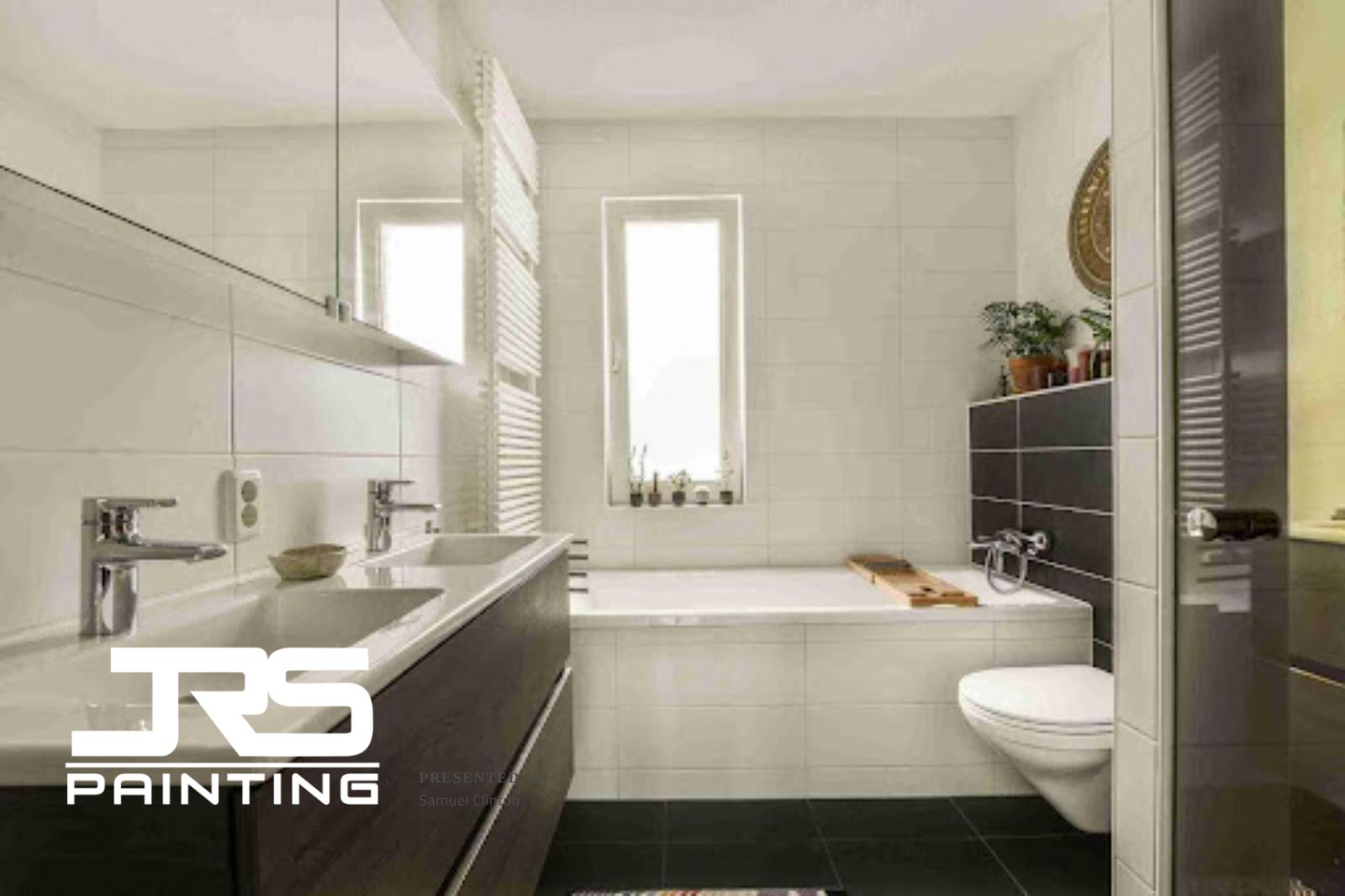
Small bathrooms are a common reality in Phoenix homes. Whether it’s a guest bath tucked under the stairs or a compact master ensuite, tight square footage can feel cramped and claustrophobic. But here’s the good news: the right paint colors and techniques can completely transform how a small bathroom feels without knocking down a single wall.
With some smart color choices and strategic placement, homeowners can make their smallest rooms feel brighter, airier, and surprisingly spacious.
How Paint Color Affects the Perception of Space
Color does more than set a mood. It physically changes how the eye perceives depth, height, and width.
Light colors reflect more light, making walls appear to recede. Dark colors absorb light and pull surfaces forward, which can make a small room feel even tighter. That doesn’t mean dark paint is off limits, but it needs to be used thoughtfully.
Temperature matters too. Cool tones like blues, greens, and soft grays tend to feel expansive and calming. Warm tones like reds, oranges, and deep yellows bring energy but can make walls feel more enclosed than they actually are.
Then there’s sheen. A satin or semi-gloss finish bounces light around the room far better than a flat matte. In a windowless half bath or a bathroom with limited natural light, that extra reflectivity can make a noticeable difference.
Best Color Palettes for Small Bathrooms
Soft Whites and Warm Greiges
Pure white can come off as cold or harsh when overhead lights are too bright.
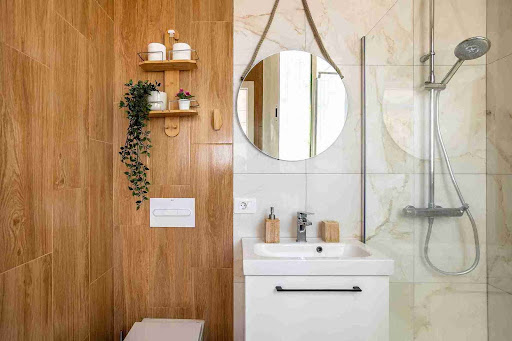
A better approach is choosing soft whites with warm undertones or greige shades that blend gray and beige. These colors feel fresh without being cold, and they pair beautifully with natural wood tones and brushed metal fixtures common in Phoenix homes.
Colors like Benjamin Moore’s Simply White or Sherwin-Williams Agreeable Gray work well in bathrooms because they adapt to different lighting conditions throughout the day.
Cool Blues and Aquas for a Spa Feel
Want that relaxing spa vibe? Light aquas, soft teals, and pale blues create a sense of calm and openness. These colors naturally evoke water and sky, which makes them feel right at home in a bathroom setting.
A powder blue ceiling paired with crisp white walls can make a small bathroom feel taller and more serene. It’s a subtle touch that guests might not consciously notice, but they’ll feel it.
Two-Tone Walls to Add Height or Width
Painting a single wall in a slightly deeper shade draws the eye and creates the illusion of depth. This works particularly well on the wall behind the vanity or on the wall opposite the door.
For a room that feels squat, paint the lower two-thirds of the walls in a darker tone and the upper third in a lighter shade. This pulls the eye upward, giving the impression of higher ceilings. A narrow bathroom benefits from horizontal color blocking, where lighter shades on the long walls make the space feel wider.
Strategic Paint Placement for a Larger Feel
Where paint goes matters just as much as what color gets used.
Painting the ceiling a shade or two lighter than the walls makes it appear higher. Even in a bathroom with standard eight-foot ceilings, this trick creates breathing room overhead.
Accent walls can elongate a room when placed correctly. A deeper color on the back wall of a long, narrow bathroom draws the eye forward and makes the space feel less tunnel-like. But avoid painting multiple walls in bold colors because that defeats the purpose and closes in the room.
Vertical stripes or color blocking that runs from floor to ceiling adds height. Horizontal lines add width. Homeowners should think about what their specific bathroom needs most before committing to a pattern.
Pairing Paint with Tile, Fixtures, and Lighting
Paint doesn’t exist in a vacuum. It has to work with what’s already in the room.
Most Phoenix homeowners aren’t ripping out tile just to repaint. So the color needs to complement the existing tile, countertops, and flooring. Pulling a subtle undertone from the tile and echoing it on the walls creates cohesion. Beige tile? Look for warm neutrals. Blue-gray tile? Lean into cool tones.
Lighting temperature changes how color appears. Warm bulbs make cool colors look muddy. Cool bulbs can make warm tones look washed out. Before deciding, test paint samples under the actual bathroom lighting at different times of day.
Simple upgrades like a new mirror frame, updated hardware, or a fresh set of towels can tie everything together without a major renovation. A well-chosen paint color is the foundation, but these finishing touches complete the look.
Finish and Product Recommendations
Bathrooms are humid environments. The paint needs to handle moisture without peeling, bubbling, or growing mildew.
For walls, satin or semi-gloss finishes work best. They’re easier to clean and stand up better to steam than flat paint. Ceilings can go with a satin sheen as well, especially in a bathroom with a shower.
Trim and doors look sharpest in semi-gloss or high-gloss finishes. The shine creates visual contrast and holds up well to frequent wiping.
Mildew-resistant paints formulated specifically for bathrooms are worth the extra cost. Brands like Benjamin Moore Aura Bath and Spa or Sherwin-Williams Duration Home are designed to handle high-moisture environments without breaking down.
Professional Tips for a Flawless Small Bathroom Finish
Small bathrooms are tricky to paint. Tight corners, awkward angles around toilets, and limited maneuvering space make the job harder than painting a large open room.
Working around fixtures requires patience. A quality angled brush is essential for cutting in behind toilets, around vanities, and along the edges of mirrors. Spray painting is rarely an option in a small bathroom because overspray gets everywhere.
Masking takes longer in small spaces but pays off in cleaner results. Use painter’s tape on all edges, and press it down firmly to prevent bleed-through. Remove the tape while the final coat is still slightly tacky for the sharpest lines.
This is where bringing in professionals like Jr’s Painting makes a real difference. Their team has the experience and tools to handle tight spaces efficiently, and they know how to prep surfaces properly so the finish lasts in a humid bathroom environment.
Time for a Simple, High-Impact Makeover
A small bathroom doesn’t have to feel small. The right paint colors, finishes, and application techniques can open up even the tightest spaces and turn a forgettable powder room into a favorite spot in the house.
Light colors expand walls. Cool tones calm the eye. Strategic placement of darker accents adds depth without closing things in. And when the paint coordinates with existing tile and lighting, the whole room comes together.
For Phoenix homeowners ready to breathe new life into a cramped bathroom, a thoughtful paint job is one of the fastest and most affordable upgrades available. Plan the palette, pick the right products, and watch a tight space transform into something that feels open, fresh, and surprisingly roomy.
Frequently Asked Questions
Ready to Transform Your Small Bathroom?
Don’t let a tight space hold you back from the bathroom you deserve. Whether you need help choosing the perfect color palette or want a flawless professional finish, Jr’s Painting is here to help Phoenix homeowners make the most of every square foot.
Request Your Free Estimate Today or call us at 602-573-1419 to schedule your consultation.


