When cabinets start showing their age, homeowners face a familiar question: do we refinish, paint, or replace entirely? The answer depends on which room you’re referring to. Kitchens and bathrooms impose very different demands on cabinet finishes, and what works beautifully in one space may fail quickly in another.
Refinishing cabinets sounds simple until you consider how moisture affects bathroom vanities or how cooking grease builds up on kitchen doors. Understanding these differences helps homeowners make smarter decisions about their cabinets.
What Cabinet Refinishing Actually Involves
Refinishing means stripping down the existing finish on your cabinets and applying a new one. Unlike painting, which adds layers over what’s already there, refinishing removes the old coating first. This process exposes the natural wood beneath, which is then stained or coated with a clear protective finish.
Refinishing is best suited for solid wood cabinets where the underlying structure remains intact, but the surface finish has deteriorated.
The difference between refinishing and painting comes down to the final look you want:
- Refinishing keeps the wood grain visible and relies on the natural beauty of the material
- Painting covers everything with a solid color
- Replacement means new cabinet boxes and doors altogether
Most homeowners consider refinishing when their cabinet boxes remain solid, but the finish looks dated or damaged. The wood itself might be fine, while the surface coating has worn through from years of use.
Kitchen Cabinet Refinishing Demands More
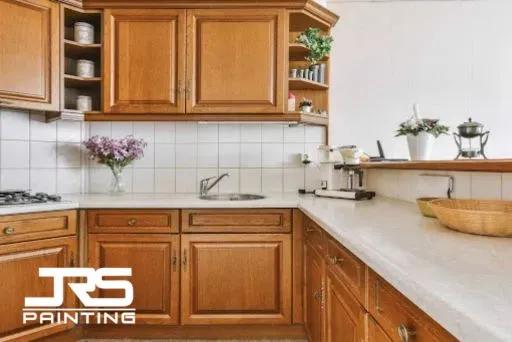
Kitchens put cabinets through daily stress that few other spaces match. Every time someone cooks, cabinets near the stove absorb heat and airborne grease. Cabinet doors by the sink get splashed constantly. Handles and knobs on pantry doors might be touched dozens of times per day.
How Kitchen Use Affects Cabinet Finishes
Grease presents the biggest challenge during kitchen cabinet refinishing. Even homes with excellent ventilation accumulate a thin film on cabinet surfaces over time. This invisible layer must come off completely before any new finish can bond properly. Skipping thorough degreasing leads to finishes that peel within months.
Heat also affects how kitchen cabinet finishes age. Upper cabinets near ranges experience temperature fluctuations that can accelerate the breakdown of protective coatings beyond normal wear. The finish on these cabinets often shows damage first, appearing cloudy or cracked, even when cabinets elsewhere in the kitchen look fine.
Surface Preparation for Kitchen Cabinets
Surface preparation takes longer in kitchens than in other rooms. All traces of grease, cooking-spray buildup, and old wax must be removed. The wood needs to be completely clean and dry before refinishing begins. Rushing this step guarantees problems later.
Kitchen cabinets require finishes that can withstand daily use. The coating must withstand heat, repel moisture from steaming pots, and withstand repeated cleaning. Durability matters more than achieving a perfect appearance, though both are possible with the right approach.
Bathroom Cabinets Face Different Challenges
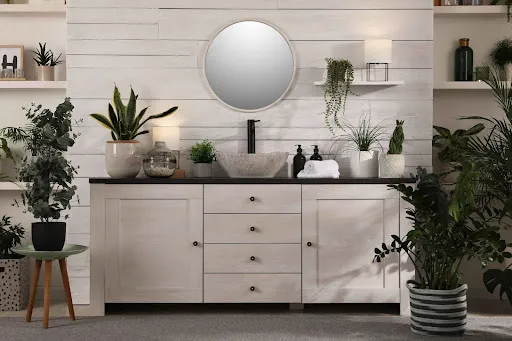
Bathroom vanities live in one of the most hostile environments in your home. Hot showers fill the room with steam several times a day. Humidity levels spike and drop repeatedly. Even with a good exhaust fan, moisture hangs in the air longer than most people realize.
Moisture and Humidity Challenges
This constant exposure to moisture affects cabinet finishes differently than kitchen conditions do. Water vapor can penetrate under finishes that weren’t applied correctly or haven’t fully cured. Once moisture gets trapped beneath the coating, it causes:
- Bubbling or peeling
- Cloudy appearance that won’t buff out
- Premature finish breakdown
The cabinet material itself matters more in bathrooms. Solid wood handles moisture exposure better than MDF or particleboard, which can swell when they absorb humidity. Some bathroom cabinets were built with moisture-resistant materials, while others were constructed the same way as kitchen cabinets.
Finish Protection for Bathroom Cabinets
Proper ventilation during and after refinishing becomes especially important in bathrooms. The new finish requires sufficient time to cure in conditions that aren’t consistently humid. Jr’s Painting has seen bathroom cabinets that looked pristine but failed within a year because the finish never fully cured before regular use resumed.
Moisture-resistant topcoats provide extra protection for bathroom cabinets. These specialized finishes provide a stronger barrier against steam and humidity than standard options. The added protection extends the time before the refinished surface shows signs of moisture damage.
Kitchen and Bathroom Cabinets Require Different Approaches
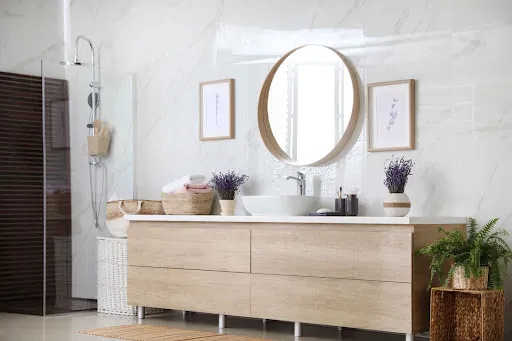
Treating kitchen and bathroom cabinet refinishing as identical processes leads to disappointing results. The level of preparation varies significantly between the two spaces. Because kitchens and bathrooms place different demands on cabinets, refinishing methods that work in one space may fail in the other.
Kitchens require aggressive degreasing and, in some cases, light sanding to remove built-up grime. Bathrooms require careful moisture management throughout the process.
Finish durability expectations should vary by room as well:
- Kitchen cabinet finishes take more physical abuse from handling and impacts
- Bathroom finishes face less direct contact but deal with constant moisture exposure
- A finish that performs beautifully in a kitchen might fail quickly in a bathroom
Maintenance requirements also differ. Kitchen cabinets need regular cleaning with appropriate products that won’t damage the finish. Bathroom cabinets benefit from maintaining controlled humidity and wiping down surfaces prone to condensation.
How Long Kitchen and Bathroom Cabinet Refinishing Lasts
The lifespan of refinished cabinets depends heavily on several factors that homeowners can partly control. Usage patterns play a huge role. Cabinets in a busy family kitchen with multiple cooks take more abuse than those in an occasional-use guest bathroom.
Environmental exposure matters just as much. Kitchen cabinets near cooking areas age faster than those on opposite walls. Bathroom cabinets directly across from the shower experience more moisture than vanities in powder rooms. Location within the room affects the durability of cabinet finishes.
The quality of the refinishing work itself determines much of the outcome. Proper surface preparation, appropriate product selection, correct application techniques, and adequate curing time all contribute to the finish’s service life. Cutting corners on any of these steps significantly shortens the lifespan.
Homeowners who properly maintain their refinished cabinets extend the finish’s life considerably. Using the right cleaning products, avoiding excessive moisture exposure, and addressing small problems before they become big ones all help.
When Cabinet Refinishing Is and Isn’t the Right Choice
Cabinet refinishing works best when the cabinet boxes remain structurally sound but the finish looks worn or outdated. Solid wood cabinets from quality manufacturers often make excellent candidates for refinishing. The underlying material has decades of life left, and only the surface needs renewal.
Refinishing may not be worth the investment if the cabinet boxes are significantly damaged. Warped doors, loose joints, damaged drawer boxes, or water-damaged cabinet sides indicate that replacement is more cost-effective.
Sometimes painting provides a better option than refinishing. Homeowners who want a completely different color or prefer a modern painted look over natural wood gain nothing from refinishing. Learn more about the cabinet painting process and how it compares to refinishing.
The condition of your cabinets matters far more than their age. Well-built twenty-year-old cabinets might be perfect candidates for refinishing, while poorly constructed five-year-old cabinets might already be past saving.
Making the Right Choice for Each Space
Kitchens and bathrooms require different refinishing approaches because they present different challenges for cabinets. Recognizing these differences helps homeowners set realistic expectations about what refinishing can accomplish in each space.
Professional assessment helps identify potential problems before work begins. Experienced cabinet painters can spot moisture damage, structural issues, or material problems that might affect the refinishing outcome. Getting this expert input before committing to refinishing prevents expensive surprises later.
The decision to refinish cabinets should take into account both the current condition and the environmental demands of each room. Beautiful kitchen cabinets require finishes that can withstand daily cooking. Bathroom vanities require protection from constant humidity exposure.
Homeowners who understand these differences make better decisions about their cabinets. Whether you choose refinishing, painting, or replacement depends on matching the right approach to your specific situation. Taking time to evaluate each space individually leads to results that last and look great for years.
Transform Your Cabinets with Professional Refinishing
Ready to restore the beauty of your kitchen or bathroom cabinets? Jr’s Painting brings over 20 years of experience refinishing cabinets throughout the Phoenix metro area. We understand how different spaces demand different approaches and use techniques that deliver long-lasting results.
Schedule your free consultation today to discuss the best refinishing approach for your home.

Related Articles
Exterior Painting, Interior Painting, Residential Painting
Interior Painting, Residential Painting