Bathrooms get repainted more often than most other rooms in the home, and there’s a good reason for that. Between the daily showers, steam from hot baths, and constant humidity fluctuations, bathroom walls take a beating that living rooms and bedrooms never experience. What works perfectly fine in a bedroom can fail spectacularly in a bathroom within months.
This guide walks homeowners through the entire bathroom painting process, from the prep work that most people skip to the finishing touches that make the difference between a paint job that lasts two years versus one that holds up for seven or more. Whether someone plans to tackle this project on a Saturday afternoon or wants to understand what a professional should be doing, knowing these steps helps avoid the most common (and expensive) mistakes.
Bathrooms present unique challenges that require specific techniques and materials. Get those right, and the results speak for themselves. Get them wrong, and peeling paint or mildew growth becomes an unwelcome reality within the first year.
Is Painting a Bathroom Different Than Other Rooms?
The short answer is yes, absolutely. High humidity creates an environment where regular wall paint struggles to survive. Every time someone takes a hot shower, steam condenses on cool surfaces, and that moisture seeps into paint that wasn’t designed to handle it. Over time, this leads to adhesion problems where paint loses its grip on the wall.
Many homeowners make the mistake of grabbing leftover paint from another room and assuming it will work just fine. A few months later, they’re dealing with bubbling, peeling, or worse, visible mold growing behind the paint film. Bathrooms without proper ventilation face even greater risks, as trapped moisture has nowhere to go except into porous surfaces.
Regular interior paint lacks the additives that help resist mold spores and mildew growth. In a bathroom, those spores find a perfect breeding ground when moisture gets trapped between the paint and the wall surface. The result is not just an aesthetic problem but potentially a health concern for anyone sensitive to mold exposure.
Understanding these differences helps explain why cutting corners in a bathroom rarely saves money in the long run. The few extra dollars spent on proper materials and preparation prevents costly repairs and repainting projects down the road.
Tools & Materials You’ll Need Before You Start
Walking into a paint store without a clear list often leads to forgotten items and extra trips. Having everything on hand before starting saves time and frustration.
Essential Tools
Quality rollers make a noticeable difference in how smoothly paint goes on and how professional the final result looks. A good roller cover designed for the paint sheen being used prevents those annoying texture patterns that scream amateur work. Paint trays with liners make cleanup faster, and drop cloths protect floors and fixtures from inevitable drips and splatters.
Extension poles reach ceiling areas without requiring a ladder for every stroke, making the work go faster and reducing fatigue. Angled brushes give better control when cutting in around trim, fixtures, and tight corners where rollers can’t reach. Cheap brushes shed bristles that get stuck in wet paint, creating bumps that need sanding later.
Sanding tools smooth out rough spots and help new paint adhere properly. A caulking gun becomes necessary when sealing gaps around tubs, sinks, and trim where moisture loves to sneak in and cause problems behind the scenes.
Bathroom-Specific Materials
Moisture-resistant primer creates a barrier between the wall and the topcoat, giving paint something to grip onto even when humidity levels spike. Skipping primer in a bathroom is one of those shortcuts that seems smart until the paint starts failing six months later.
Mildew-resistant paint contains antimicrobial additives that inhibit mold and mildew growth on the painted surface. Not all paints labeled for bathrooms offer this protection, so reading labels carefully matters. Some brands add these protections only to specific product lines.
Quality caulk seals gaps where water could penetrate. Paintable caulk that stays flexible over time prevents cracks from reopening as buildings settle and materials expand or contract with temperature changes. Patching compounds fill nail holes and minor damage before priming.
Step-by-Step Bathroom Painting Process
Step 1: Prepare the Bathroom
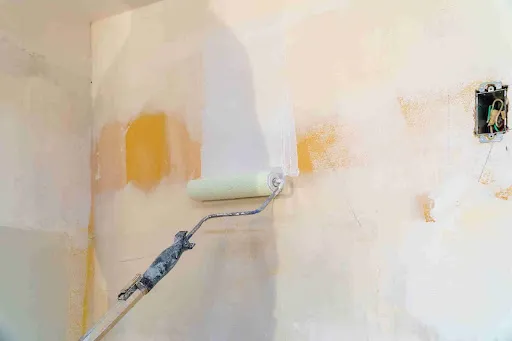
Start by removing towel bars, toilet paper holders, wall décor, and any removable hardware. Painting around these items almost always leaves visible edges and uneven coverage. Taking a few minutes to remove them makes the job faster and results in cleaner finished walls.
Next, protect everything that stays in place. Cover toilets, sinks, tubs, and vanities with plastic sheeting and secure it with painter’s tape. Lay down drop cloths on the floor and tape the edges to prevent movement while you work. Good airflow is also necessary, so open windows or run the exhaust fan to help control moisture and speed up drying. Learning how to prep bathroom walls for painting the right way sets the foundation for everything that follows.
Step 2: Clean the Walls Thoroughly
Bathroom walls collect more than just visible dirt. Soap residue, body oils, and moisture buildup can prevent paint from sticking properly. Washing walls with warm water and a TSP cleaner or a TSP substitute removes this hidden film and leaves a clean surface for painting.
After cleaning, rinse the walls with fresh water to remove any leftover residue, then allow them to dry completely. Painting over damp walls traps moisture and can lead to peeling paint or mold growth. In humid conditions, allowing the walls up to 24 hours to fully dry helps prevent issues later.
Step 3: Repair Damage and Seal Gaps
Before priming, inspect the walls for nail holes, cracks, or peeling paint. Minor imperfections can be filled with spackle or joint compound, while larger repairs may need mesh tape and additional layers. Allow each repair to dry thoroughly so it doesn’t shrink or crack under the paint.
Caulking is just as important. Old or damaged caulk around tubs, sinks, and trim should be removed and replaced to keep moisture from getting behind the walls. Smooth, fresh caulk creates a tight seal and gives the bathroom a finished, professional look.
Step 4: Sand and De-Gloss the Surface
Light sanding helps new paint stick, especially if the existing paint has a glossy finish. Using fine-grit sandpaper lightly scuffs the surface without damaging the wall. The goal is to remove shine, not strip the paint completely.
If sanding generates excessive dust, a liquid deglosser can be used instead. These products chemically prepare the surface for painting. Once sanding or deglossing is complete, wipe the walls with a damp cloth to remove dust so the paint applies smoothly.
Step 5: Prime for Moisture Resistance
Primer is essential in bathrooms due to constant humidity. A moisture-resistant, mold-inhibiting primer helps paint adhere properly and adds a protective layer against moisture. Skipping primer often leads to uneven color and early paint failure.
Allow the primer to dry completely before painting. While some primers dry quickly, letting them cure overnight provides better results, especially in damp environments. Proper drying time here helps the entire paint job last longer.
Step 6: Choose the Right Bathroom Paint
Not all paint finishes are suitable for bathrooms. Flat and matte paints absorb moisture and show stains easily, making them poor choices. Semi-gloss paint resists moisture, cleans easily, and holds up best in high-humidity spaces.
Satin finishes offer a softer look while still providing decent moisture resistance, making them popular for bathroom walls. Choosing a high-quality paint also makes a difference: it covers more evenly and lasts longer with fewer coats.
Those wondering about the most popular paint colors for bathrooms in 2026 – > (link to blog 1 of January 2026) will find that color choices are being influenced by lifestyle, lighting, and long-term durability. However, personal style should always take priority over trends.
Step 7: Paint the Bathroom Correctly
Start by cutting in around edges, corners, and fixtures with a brush, then roll the walls while keeping a wet edge. Working in sections helps prevent visible lines and uneven patches. Smooth, consistent strokes create a more professional finish.
Most bathrooms need two coats of paint. The first coat establishes color and seals the surface, while the second coat adds durability and protection against daily moisture. Rushing with one thin coat usually leads to early wear and uneven results.
Step 8: Drying, Curing, and Reinstalling Fixtures
Paint may feel dry within a few hours, but complete curing takes longer. During this time, the paint hardens and reaches its full durability. Using the shower too soon can damage uncured paint and cause peeling or soft spots.
It’s best to wait at least 24 hours before exposing walls to moisture; 48 to 72 hours is ideal. Reinstall hardware carefully once the paint has cured enough to avoid scratches or chips. Taking your time at this final stage protects all the work you’ve done.
Best Paint Finishes for Bathrooms
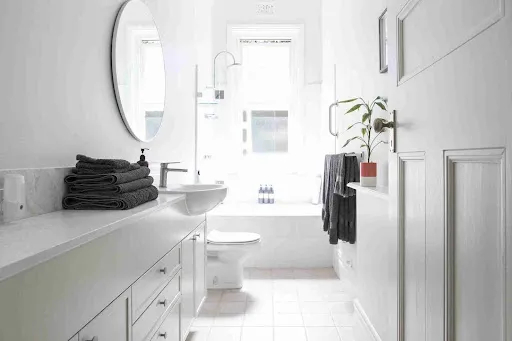
Choosing the right paint finishmatters just as much as color. Semi-gloss reflects the most light, making bathrooms feel brighter while providing maximum moisture resistance and cleanability. The shine can highlight wall imperfections, so surface prep becomes more important with higher gloss levels. For bathrooms that see heavy use, semi-gloss on all surfaces makes maintenance easier.
Satin offers a softer look while still providing good moisture resistance. Many homeowners find that satin on walls with semi-gloss on trim creates visual interest while meeting practical needs. Satin shows water spots less than semi-gloss but still wipes clean without leaving marks.
Eggshell works in powder rooms or guest bathrooms that see occasional use, but typically can’t handle the moisture levels in master bathrooms with daily showers. The lower sheen hides imperfections better than satin or semi-gloss but sacrifices some durability and cleanability.
In small bathrooms, the right paint choice can completely change how the space feels. Looking at paint ideas that help a small bathroom feel largercan provide helpful direction before making a final decision.
Professional painters typically recommend semi-gloss or satin for main bathrooms, with the choice often coming down to personal preference about shine levels. Companies like Jr’s Painting in the Metro-Phoenix area often guide homeowners through these decisions during consultations, helping match finish choices to specific bathroom conditions and usage patterns.
How to Prevent Mold & Mildew After Painting
Even the best paint job needs proper ventilation to stay mold-free. Running the exhaust fan during showers and for 20 to 30 minutes afterward removes moisture before it can condense on walls and ceilings. Many homeowners leave the fan running whenever someone showers, creating a habit that protects their investment.
Exhaust fans only work when they’re actually moving air outside, not just recirculating it. Checking that the fan vents to the exterior and that the ductwork isn’t damaged or disconnected prevents the illusion of ventilation without actual moisture removal. Cleaning or replacing filters as needed maintains airflow.
Keeping bathroom doors open when not in use allows moisture to dissipate instead of being trapped. Quick wipe-downs of walls and ceilings after showers remove water before it can soak in. These simple habits extend paint life significantly and prevent mold problems that require expensive remediation.
If mold is a concern, this article sharespractical tips to keep painted surfaces clean and moisture-free.
Common Bathroom Painting Mistakes to Avoid
Skipping primermight save an hour, but it costs months or years of paint life. The primer designed for bathrooms provides the foundation on which everything else depends. Trying to save money here almost always backfires.
Using the wrong paint finishsets up disappointment. Flat paint in a shower area will fail, no matter how carefully it’s applied. Choosing appropriate sheens for the moisture levels involved makes the difference between success and frustration.
Painting over damp surfacestraps moisture that causes adhesion problems and mold growth. Impatience at this stage ruins otherwise good preparation work. Taking the time to verify walls are completely dry prevents problems that show up weeks later.
Rushing drying timesbetween coats, before hardware reinstallation, or before shower use, compromises the final result. Paint needs time to cure and harden properly. Treating manufacturer timing recommendations as suggestions rather than requirements leads to subpar outcomes.
How Long Does Bathroom Paint Last?
Well-executed bathroom paint jobs typically last five to seven years before showing wear significant enough to warrant repainting. Some can go longer with excellent ventilation and careful maintenance. Poor ventilation, inadequate prep work, or wrong paint choices can cut this timeline to two years or less.
Factors that extend paint life include:
- Good exhaust ventilation
- Quality paint and primer products
- Proper surface preparation
- Regular cleaning to prevent buildup
- Windows that open for natural ventilation
Signs that repainting time has arrived include visible mold or mildew growth, peeling or bubbling paint, persistent water stains that won’t clean off, and overall dullness despite cleaning. Catching these early prevents damage from spreading and makes the next paint job easier.
DIY vs Hiring a Professional Bathroom Painter
DIY bathroom painting can seem simple at first since you’re only buying paint and basic supplies. However, using the wrong products or skipping key steps can lead to problems that require repairs later. Professional painting goes beyond applying paint; it includes proper preparation, product knowledge, and experience working in humid bathroom conditions.
Time is another consideration. DIY projects involve shopping, prep work, painting, cleanup, and waiting for paint to dry. What professionals can complete efficiently may take a homeowner several days, especially if unexpected issues come up. Hiring an experienced bathroom painterremoves the stress and guesswork.
The difference in quality often shows over time. Professionals know how to paint cleanly around fixtures, avoid streaks, and choose materials that last. Many also provide warranties, offering peace of mind that DIY projects don’t.
Professional painting is a good choice when:
- Time is limited
- The bathroom needs repairs
- Long-lasting results matter
- You’re not confident in your painting skills
For small powder rooms in good condition, DIY painting can work well for homeowners comfortable with basic home projects.
Frequently Asked Questions
Getting a Bathroom Paint Job That Lasts
A bathroom paint job only lasts when the prep work is done right. Clean walls, high-quality materials, and moisture-resistant products are essential in a space that is exposed to humidity daily. Skipping these steps often results in peeling, staining, and early failure.
Bathrooms face more moisture than any other room in the home, so they need a different approach than standard interior painting. Knowing what works in these conditions helps homeowners decide whether to DIY or hire professionals who understand the specific bathroom challenges.
For Metro Phoenix homeowners looking for durable, professional results, Jr’s Paintingoffers free estimates and expert guidance. From proper preparation to the final coat, working with the right team ensures your bathroom paint holds up for years to come.
Ready to refresh your bathroom? Contact Jrs Paintingtoday for your free estimate and discover what professional bathroom painting can do for your space.

Related Articles
Interior Painting, Residential Painting
Interior Painting, Residential Painting, Tips & Tricks