
Homeowners often assume the tool makes the difference when painting cabinets. The truth is, it’s not that simple. Application method matters, but probably not for the reasons most people think.
The finish quality of painted cabinets depends on preparation, product selection, and proper technique. The spray gun or brush just delivers the coating. Think of it like this: a chef’s knife doesn’t make the meal taste better if the ingredients are poor. The same logic applies to cabinet painting.
Spray Painting Cabinets Explained
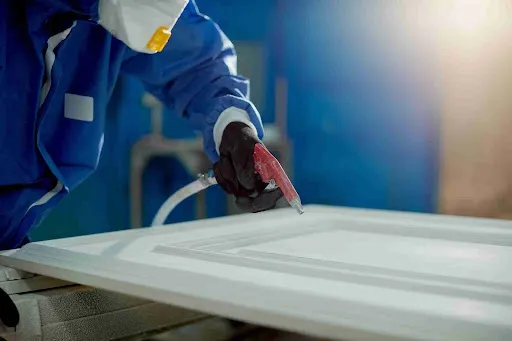
Spray application produces smooth finishes by atomizing paint into fine droplets that land evenly on the surface. There’s no brush dragging across the wood grain or leaving behind stroke marks. The coating is applied in a uniformly thin layer, which helps prevent drips and creates the factory-like appearance many homeowners want.
The catch? Overspray. Paint particles don’t just land on cabinet doors. They float through the air and settle on floors, walls, countertops, and other nearby surfaces. Professional painters address this by setting up containment areas with plastic sheeting or removing doors to spray in controlled spaces.
Weather affects spray painting more than most people realize:
- High humidity slows drying time and can cause the finish to look cloudy or rough
- Extreme heat causes paint to dry too quickly, resulting in a textured surface called “orange peel.”
- Temperature control matters, which is why many painters prefer indoor environments where conditions stay consistent
Spray equipment requires maintenance and skill. The gun needs cleaning after every use. Paint viscosity must be adjusted correctly; otherwise, the spray pattern will be uneven. These aren’t insurmountable challenges, but they explain why spraying requires practice.
Brush & Roller Cabinet Painting Explained
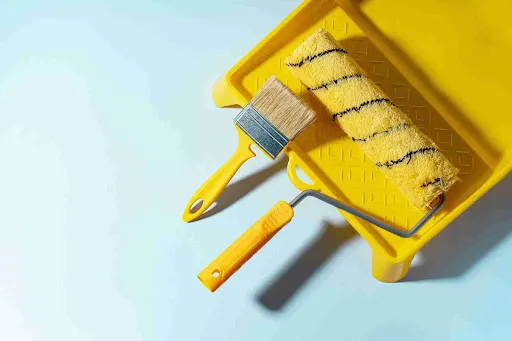
Brushing cabinets gives painters control in tight spaces where spray equipment can’t reach. Inside corners, detailed molding, and areas near walls all become easier to coat with a quality brush. The application stays contained, which matters in occupied homes where protecting surrounding areas takes extra time and effort.
The finish depends heavily on technique. Brush strokes show up when the paint gets applied too thickly or when the painter doesn’t smooth the coating properly. Some painters use foam rollers on flat surfaces and brushes for edges, which combines speed with precision.
Texture becomes the main concern with brush application. Even high-quality brushes leave subtle patterns in the paint. Modern, contemporary kitchens typically need smoother finishes that brushing alone can’t always deliver. Traditional or rustic-style cabinets often look good with a hand-painted appearance.
What Matters More Than the Tool
Surface preparation determines the final result. Cabinets need thorough cleaning to remove grease, cooking oils, and grime that prevent paint adhesion. After cleaning, sanding creates texture for the new coating to grip. Skipping these steps causes paint to peel or chip, regardless of whether it was sprayed or brushed.
The fundamentals that matter most:
- Thin coats always outperform thick ones
- Proper drying time between coats prevents softening of previous layers
- Product quality affects the outcome more than the application method
- Premium cabinet paints contain better resins and pigments that level smoothly
Paint feels dry to the touch within hours, but full cure takes longer, depending on the product. Rushing between coats produces a finish that appears acceptable initially but develops defects over time.
Jr’s Painting handles cabinet refinishing projects throughout Metro Phoenix using application methods matched to each project’s specific needs. Their approach considers the cabinet condition, kitchen layout, and desired finish quality before recommending spray, brush, or hybrid techniques.
How Application Fits Into the Cabinet Painting Process
The application method connects to every other step in the process of cabinet painting. The prep work must be completed before any coating is applied. Primers must be chosen based on the substrate and the final paint product. Color selection affects the number of coats required, as darker colors require more layers for full coverage.
Door removal is recommended during spraying, but may not be necessary for brushed applications. Hardware must be removed or masked, depending on whether the painter plans to spray or brush. These decisions cascade through the entire project timeline.
The chosen method also determines protection requirements. Spraying demands extensive masking and containment. Brushing needs less prep for the surrounding areas but takes longer for the actual painting.
Curing time follows the same principles across application types. Sprayed cabinets need the same careful handling during the cure period as brushed ones, with full use of the kitchen delayed until the coating hardens completely.
Choosing the Right Method for Your Cabinets
Cabinet condition influences method selection. Heavily damaged doors with deep scratches or dents may benefit from spray application, which helps minimize surface imperfections. Cabinets in good shape can look excellent with brushwork if the painter has a strong technique.
Consider these factors when choosing:
- Kitchen layout and ventilation capabilities
- Cabinet style and desired finish quality
- Whether doors can be removed for off-site spraying
- Dust control needs in Phoenix’s dry climate
Glass-smooth modern cabinets almost always need spray application. Traditional styles with some visible texture can look appropriate when brushed. Matching the method to the style prevents disappointment at project completion.
Phoenix’s dry climate actually helps cabinet painting compared to humid regions. Paint cures faster and more predictably here. The challenge lies in dust control, since dry air carries more particles that can land on wet paint. Both spray and brush applications require a dust-free environment for best results.
Cabinet coating systems perform best when every step is attended to. The application method is just one piece of achieving a cabinet paint finish quality that lasts.
Frequently Asked Questions
Ready to Transform Your Kitchen Cabinets?
Whether your cabinets need spray application for that factory-smooth finish or careful brushwork for a traditional look, Jr’s Painting delivers professional results throughout Metro Phoenix. Get expert guidance on the right approach for your specific cabinets and kitchen layout.


