
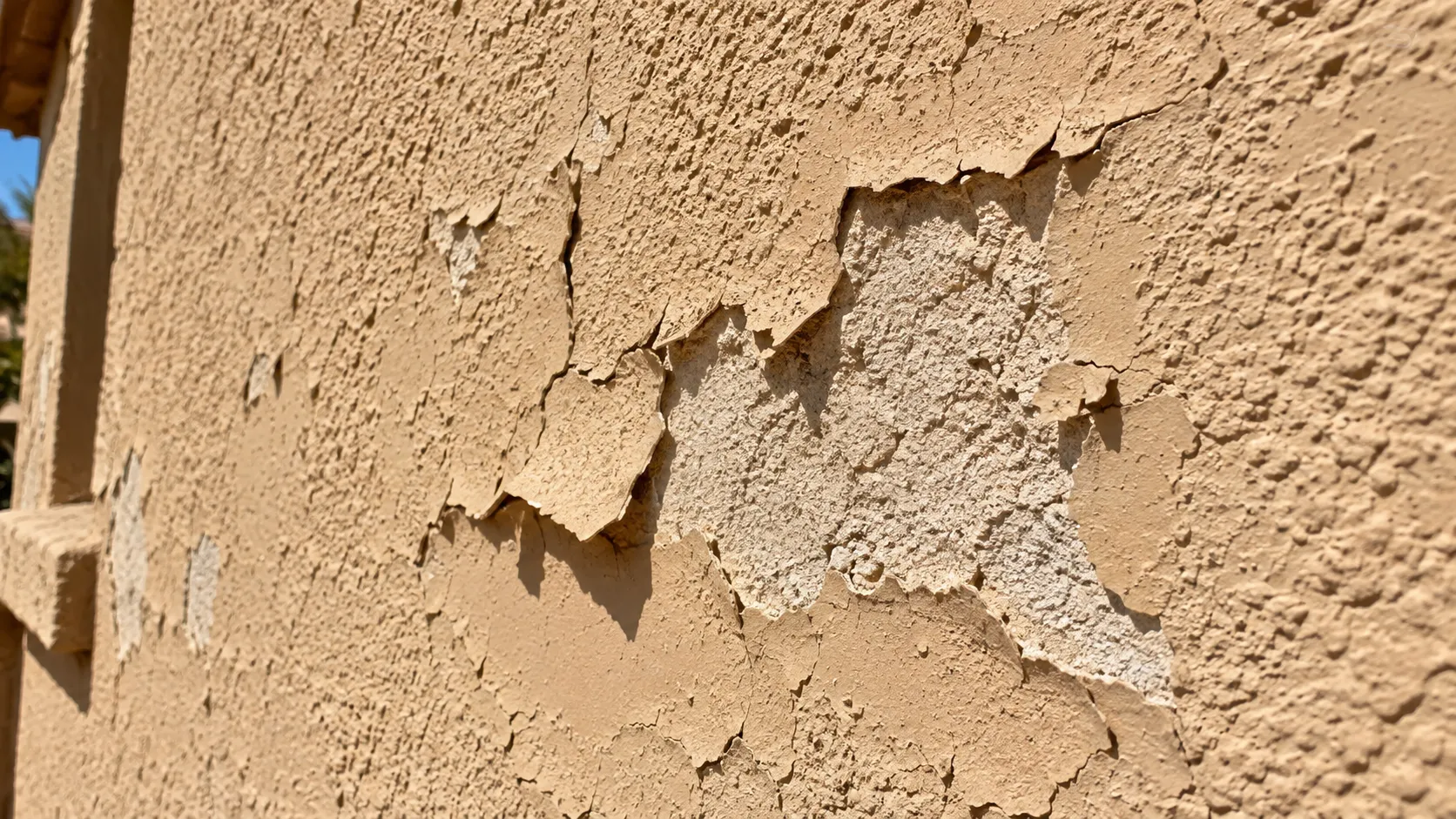
Peeling paint on stucco almost always has one of four causes: moisture behind the paint, new paint over a chalky surface, skipped or wrong primer, or paint applied to a wall that was too hot. The way the paint fails tells you which one you have. Bubbles that break open point to water. Sheets that come off with powder on the back point to chalk. Peeling that stays inside old patch lines points to primer or curing problems.
Figuring out the cause matters because repainting doesn’t fix any of them. Until you fix the cause, new paint tends to fail the same way. Understanding these problems is key to exterior painting and stucco care in Phoenix, where intense heat and sun exposure can worsen paint failures. This guide pairs each peeling pattern with its cause so you can read your walls before you call anyone.
Why Stucco Is Hard on Paint
Stucco is a cement-based finish. It’s porous, so it takes in and releases moisture. New stucco is also highly alkaline. Sherwin-Williams notes that fresh masonry and stucco have a pH of 13 to 14, and that alkalinity can break down a paint film applied too early.
Phoenix makes these weaknesses worse. Strong UV breaks down paint over time, summer heat bakes south- and west-facing walls, and monsoon storms can drive water into small cracks after months of dry weather. Each of these weakens the bond between paint and stucco, which is why stucco paint peeling in Phoenix often shows up first on the walls that take the most sun and rain.
How to Match the Peeling Pattern to the Cause
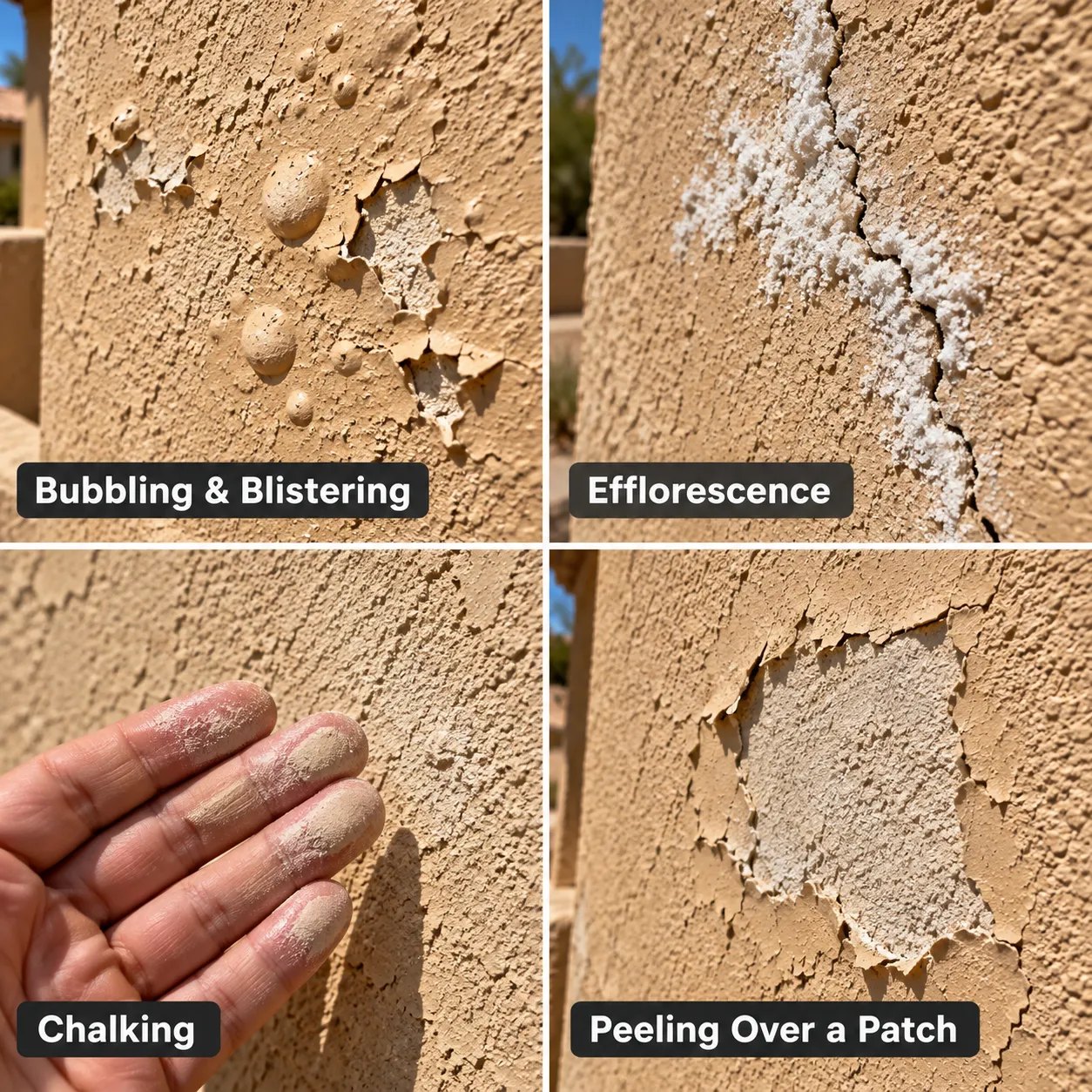
Look closely before you scrape anything. Most cases fall into one of these patterns:
- Bubbles that break and flake: moisture behind the paint
- Peeling in a band near the ground: moisture coming up from the base of the wall
- Sheets with powder on the back: paint applied over chalk
- Peeling only over patches or new stucco: skipped primer or uncured stucco
- Blisters or flaking soon after a summer paint job: paint applied to a hot surface
- Peeling that follows cracks: water entering through the stucco
The sections below cover each one.
Paint Bubbling on Stucco: Moisture Behind the Paint
What it looks like: Blisters or bubbles that eventually split open and flake off. You may also see crusty white deposits on or near the damaged area.
What causes it: Water is getting behind the paint film. Sherwin-Williams explains that peeling happens when a dry painted surface gets wet and swells. On stucco, common water sources include cracks, failed caulk around windows and pipes, sprinklers spraying the wall, poor roof or gutter drainage, and wind-driven rain during storms.
The white crust is efflorescence: salts that water carries out of the cement as it passes through the wall. According to Sherwin-Williams, efflorescence needs both salt and moisture, so seeing it strongly suggests water is moving through the stucco.
How to confirm it: Notice where the bubbles cluster. If they sit below windows, near hose bibs, under rooflines, or where sprinklers reach, moisture is the likely cause. Check those spots again after a storm or a watering cycle.
What the fix involves: Find and stop the water first. Then remove the loose paint and efflorescence, repair the stucco, and repaint. Sherwin-Williams advises against painting while efflorescence keeps coming back, because the moisture problem is still active.
Peeling Along the Bottom of the Wall: Ground Moisture
What it looks like: A strip of peeling or flaking paint along the lower part of the wall, near the foundation.
What causes it: Water at the base of the house. Planters against the wall, low-aimed sprinklers, and soil or landscaping that holds water near the foundation can keep the bottom of the stucco damp.
How to confirm it: If the damage stays low and lines up with landscaping or irrigation, ground moisture is the likely cause.
What the fix involves: Adjust the irrigation or drainage so the wall can dry out, repair any damaged stucco or foundation areas, and then prime and paint.
Paint Peeling in Sheets with Powder Underneath: Chalky Surface
What it looks like: Large flakes or sheets that release cleanly. The back of the flake, or the wall behind it, feels dusty.
What causes it: Chalking is a fine white powder that forms as paint weathers. Sherwin-Williams lists it as a common sign of sun-worn exterior paint, and Phoenix sun speeds it up. If you paint over chalk, the new paint sticks to the powder instead of the wall, and the powder eventually lets go.
How to confirm it: Rub a clean, dark cloth or your palm across a sunny wall. If you get powder on your hand, the surface is chalking. To check adhesion, press a strip of masking tape firmly onto the paint and pull it off quickly. If paint sticks to the tape, the coating isn’t well bonded.
What the fix involves: Sherwin-Williams recommends washing or power washing to remove the chalk, rinsing well, and letting the surface dry completely. A primer made for chalky masonry, such as Sherwin-Williams Loxon Conditioner, helps the new paint bond.
Peeling Over Patches or New Stucco: Skipped Primer or Uncured Stucco
What it looks like: Peeling or faded, blotchy paint only over repaired areas, patches, or additions, while the surrounding paint holds up fine.
What causes it: Fresh stucco is highly alkaline as it cures. Sherwin-Williams calls the resulting damage “alkali burn” and recommends curing new surfaces per the supplier’s instructions before painting, or using an alkali-resistant masonry primer such as Loxon when you can’t wait. Painting over a patch without the right primer leaves the new paint exposed to that alkalinity.
How to confirm it: If the peeling follows the outline of an old repair, this is the likely cause.
The fix is to remove the failed paint, ensure the patch has cured per the product directions, apply a masonry primer rated for the surface, and repaint. If you’re considering a bigger repair, our guide to the differences between drywall and stucco repair explains why stucco takes more care than interior patching.
Blisters or Flaking After a Summer Paint Job: Painting in Heat
What it looks like: Blisters or early peeling that show up shortly after painting, usually worst on walls that get the most afternoon sun.
What causes it: Sherwin-Williams lists painting in direct sunlight on a surface that is too warm as a cause of heat blistering. In a Phoenix summer, stucco in full sun can get much hotter than the air. Paint applied to it can dry too fast to bond properly.
How to confirm it: Think about when the house was last painted and which walls failed first. Early failure on sunny walls after summer work points to heat.
What the fix involves: Remove the failed paint, then repaint when the surface is shaded and within the temperature range on the product label. Experienced crews follow the shade around the house instead of painting walls in the sun.
Peeling Along Cracks: Water Entering Through the Stucco
What it looks like: Peeling paint that runs along hairline or wider cracks.
What causes it: Phoenix heat cycles make stucco expand and contract, and settling can open cracks too. Rain gets in through those cracks and loosens the paint around them.
What the fix involves: Repair the cracks properly before painting. Caulking or painting over an open crack won’t keep water out for long.
A Real Phoenix Example: Sun-Damaged Stucco in Ahwatukee
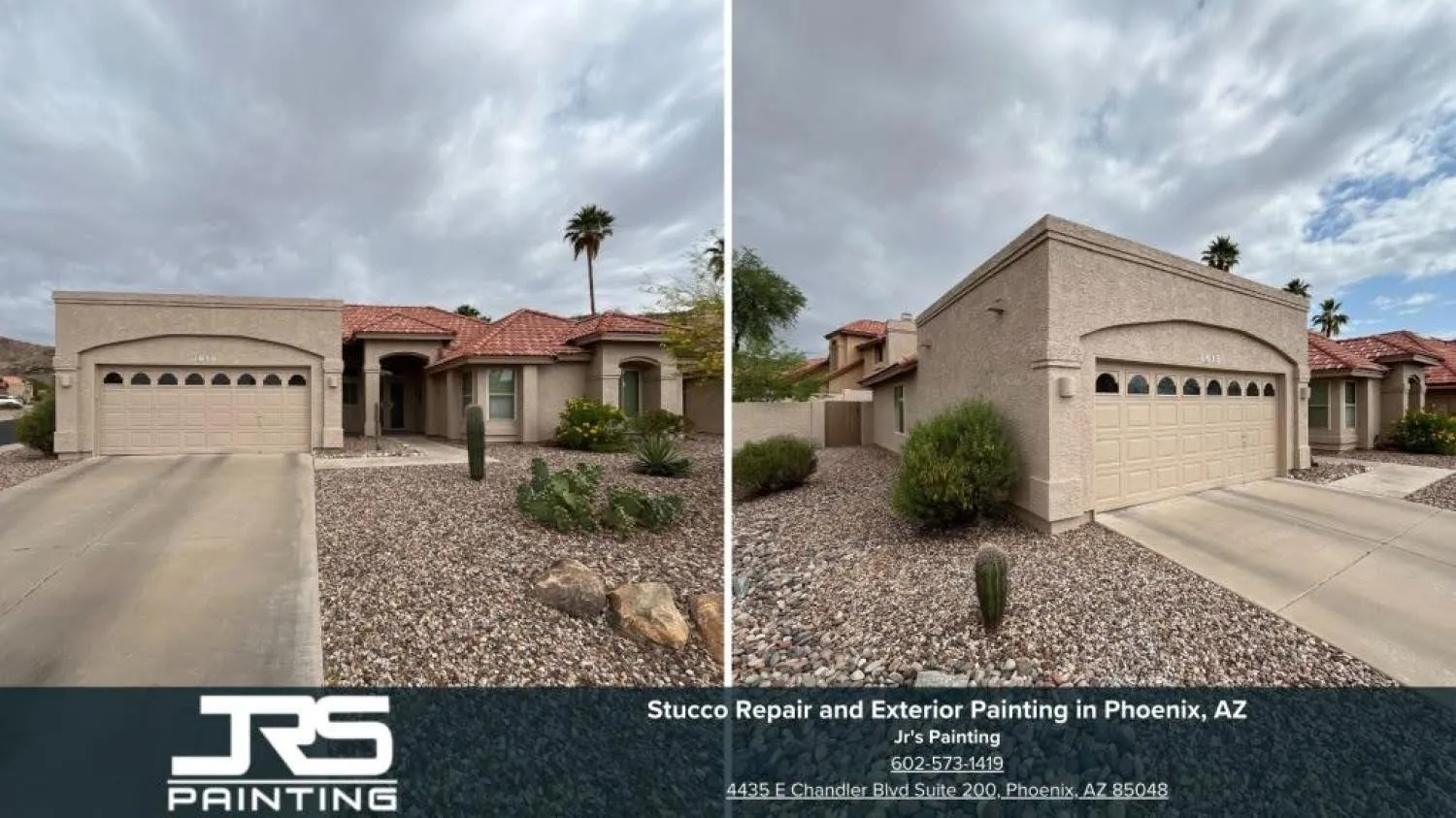
A stucco repair and repaint in Ahwatukee shows how diagnosis guides the fix. Years of sun had faded and chalked the paint, increasing the risk of peeling. The stucco was cracked in several places, and the foundation showed minor cracks and visible wear.
That house showed two of the warning patterns above: chalking and cracks. The crew addressed both causes before applying any color. They repaired the damaged stucco, reinforced weak areas, fixed the foundation so the base met the wall cleanly, and applied a primer that bonds to chalky surfaces. Prep also included power washing, caulking, masking, and protecting nearby surfaces. The team then painted the home in HOA-compliant colors with exterior paint suited to Arizona’s climate.
When to Call a Professional
Some peeling is a simple surface problem. Other peeling signals moisture or stucco damage that needs repair before painting. Call a professional if you see:
- Blistering or white efflorescence that keeps coming back
- Peeling on several walls at once
- Cracks wider than a hairline
- Peeling or crumbling along the foundation
- Paint failing soon after a recent paint job
If you aren’t sure whether your home needs a full repaint, these signs it’s time to repaint your house can help. When stucco damage is part of the problem, professional stucco repair services fix the cause so the new paint has a sound surface to hold onto.
Find Out Why Your Stucco Is Peeling Before You Repaint
Repainting over the wrong problem costs you a paint job. Jr’s Painting inspects peeling stucco to find the cause, repairs the damage, and preps the surface properly so new paint holds up in the Arizona sun. Request a free estimate and get a clear answer on what your walls need.


