
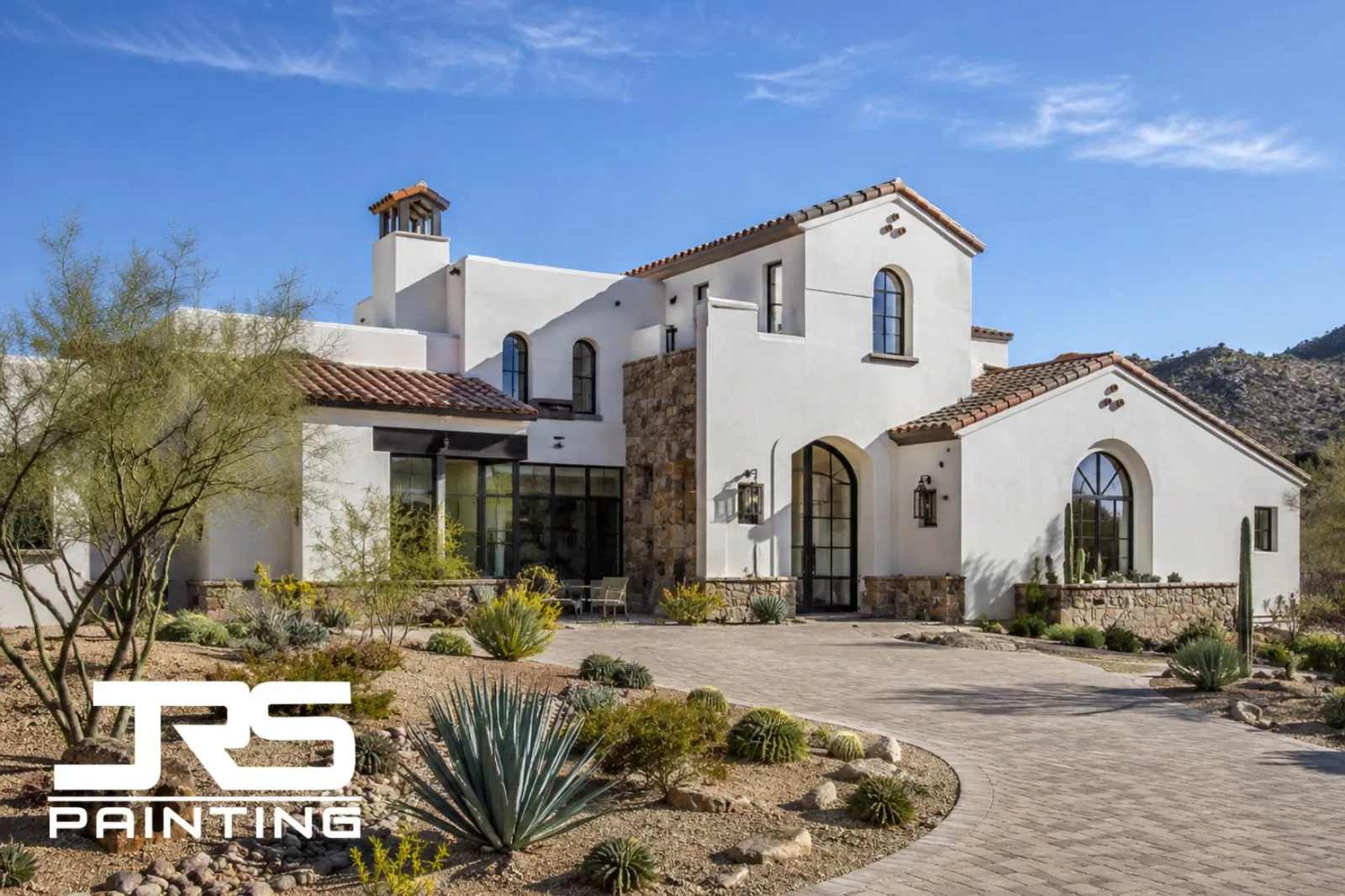
If you want to slow heat absorption on your home’s exterior, start with color. Lighter shades reflect more solar energy than darker ones, meaning your walls absorb less heat and stay more stable throughout the day.
Color alone doesn’t determine performance; paint formulation, solar reflectance, surface material, and sun exposure all play a role, but it is the most visible and controllable variable.
This guide covers eight practical colors that balance reflectance with curb appeal, along with what Phoenix-area homeowners need to know before deciding.
Do Exterior Paint Colors Really Affect Heat Absorption?
Yes, and in Arizona, the difference matters more than it does in most of the country. Light colors reflect more sunlight, while darker colors absorb more solar energy. As a result, lighter exterior surfaces tend to stay cooler and place less heat stress on the paint film over time.
White, beige, tan, and pale gray generally reflect more solar energy than charcoal, black, navy, or dark brown under similar conditions. Paint formulation matters too. Some coatings use infrared-reflective pigments that can help medium-toned colors perform better than their appearance alone would suggest.
Arizona conditions make these differences even more important. Stucco and masonry hold heat longer than wood siding, while west- and south-facing walls receive prolonged exposure to intense afternoon sun and UV radiation. For Arizona homeowners, exterior color is not only an aesthetic choice. It can also influence how the painted surface handles the climate.
8 Heat-Reflective Exterior Paint Colors That Work Well in Arizona
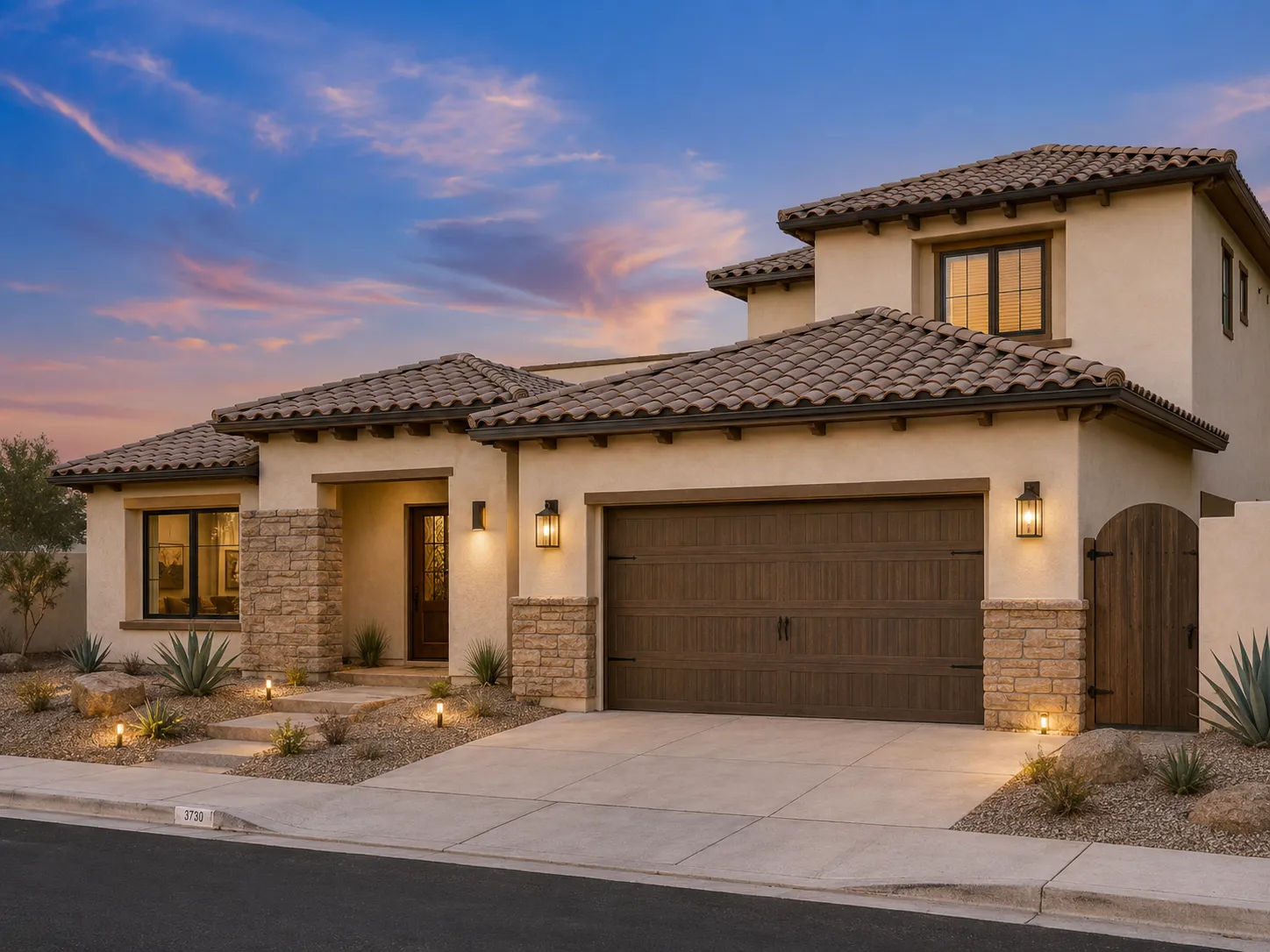
These eight colors cover a practical range from crisp and neutral to warm and desert-inspired. All perform better on sun-exposed surfaces than darker shades, and all work with the most common Arizona home styles and exterior materials.
1. Warm White
Warm white is one of the highest-performing options for solar reflectance. Unlike pure bright white, warm off-white and creamy ivory tones are less stark in strong sunlight and tend to sit more naturally against Arizona’s landscape and architecture.
Warm white works well on stucco homes with terracotta tile roofs, stone accents, brown or black window frames, and desert landscaping. It appears clean and finished without the harshness that bright white can produce under intense midday sun.
Sherwin-Williams Alabaster and Benjamin Moore White Dove both read warm enough to avoid a clinical appearance while still sitting toward the reflective end of the spectrum.
2. Light Sand
Sand tones are among the most naturally fitting exterior colors for Arizona, and they reflect considerably more solar energy than medium or dark brown alternatives.
Light sand looks grounded and desert-appropriate. It conceals dust better than white, pairs cleanly with stone, wood, and bronze finishes, and blends naturally with the surrounding terrain. For homeowners who want a neutral that feels at home in the Sonoran Desert, this is one of the most reliable starting points.
Color direction: pale sand, desert beige, light buff.
3. Soft Beige
Soft beige is one of the most versatile exterior colors for Arizona homes. It works across traditional, transitional, and contemporary architecture and stays warm enough to avoid looking washed out in strong sunlight.
Beige also tends to perform well in HOA-governed communities where neutral palettes are required or preferred. It pairs with almost any roof tone and serves as a backdrop for a wide range of trim and accent colors without competing with them.
4. Pale Greige
Greige combines the warmth of beige with the calm neutrality of gray, making it a practical option for homeowners who want something more contemporary than traditional tan.
When kept toward the lighter end of the spectrum, greige reflects well and handles strong sun without fading as quickly as deeper versions. It pairs naturally with black window frames, natural wood accents, and light stone. One important note: darker greiges absorb considerably more heat. If you are drawn to this palette, prioritize the lighter end and check the LRV before committing.
5. Light Taupe
Light taupe adds slightly more depth than soft beige while remaining well within the reflective range. It complements desert landscaping and stucco construction without competing with the surrounding environment.
For homeowners who want a little more visual weight than beige but still want heat-conscious performance, taupe is a strong middle-ground choice. Choosing a higher-LRV version gives you better reflectivity without sacrificing depth.
6. Soft Sage Green
Muted sage green is increasingly common on Southwestern and ranch-style homes. Lighter sage shades stay in the reflective part of the color spectrum while introducing visible color, making them one of the more practical options for homeowners who want to move beyond pure neutrals.
Sage pairs particularly well with cream or off-white trim, natural stone, clay tile, and wood accents. It creates a grounded, organic look instead of a decorative one, which suits the desert environment.
Color direction: dusty sage, muted olive-green, desert herb.
7. Pale Blue-Gray
Pale blue-gray works well on contemporary homes and allows homeowners to introduce color without moving into darker slate or navy territory. It brings calm, modern vibes that suit desert contemporary and ranch-influenced styles.
Actual thermal performance depends on LRV and solar reflectance, not on whether a color appears visually cool. A pale blue-gray with a high LRV outperforms a darker shade that simply looks cooler. White or near-white trim complements this palette and keeps the overall exterior appearance as light.
8. Light Terracotta or Desert Peach
Light terracotta and desert peach offer an appropriate alternative to deep rust, dark red, or saturated burnt sienna. Lighter versions of these warm tones reflect more solar energy than their traditional counterparts while retaining the Southwestern character that suits clay tile roofing.
This palette works especially well on stucco homes with brown or black window frames and desert landscaping. It gives off a warm feel without being heavy and draws naturally from the tones of the surrounding terrain.
Color direction: sandy coral, pale adobe, soft desert peach.
Quick reference by home style:
- Most versatile: Warm white
- Best desert-inspired neutral: Light sand
- Best modern neutral: Pale greige
- Best subtle color: Soft sage
- Best Southwestern option: Light terracotta
Which Exterior Colors Should Homeowners Be Careful With?
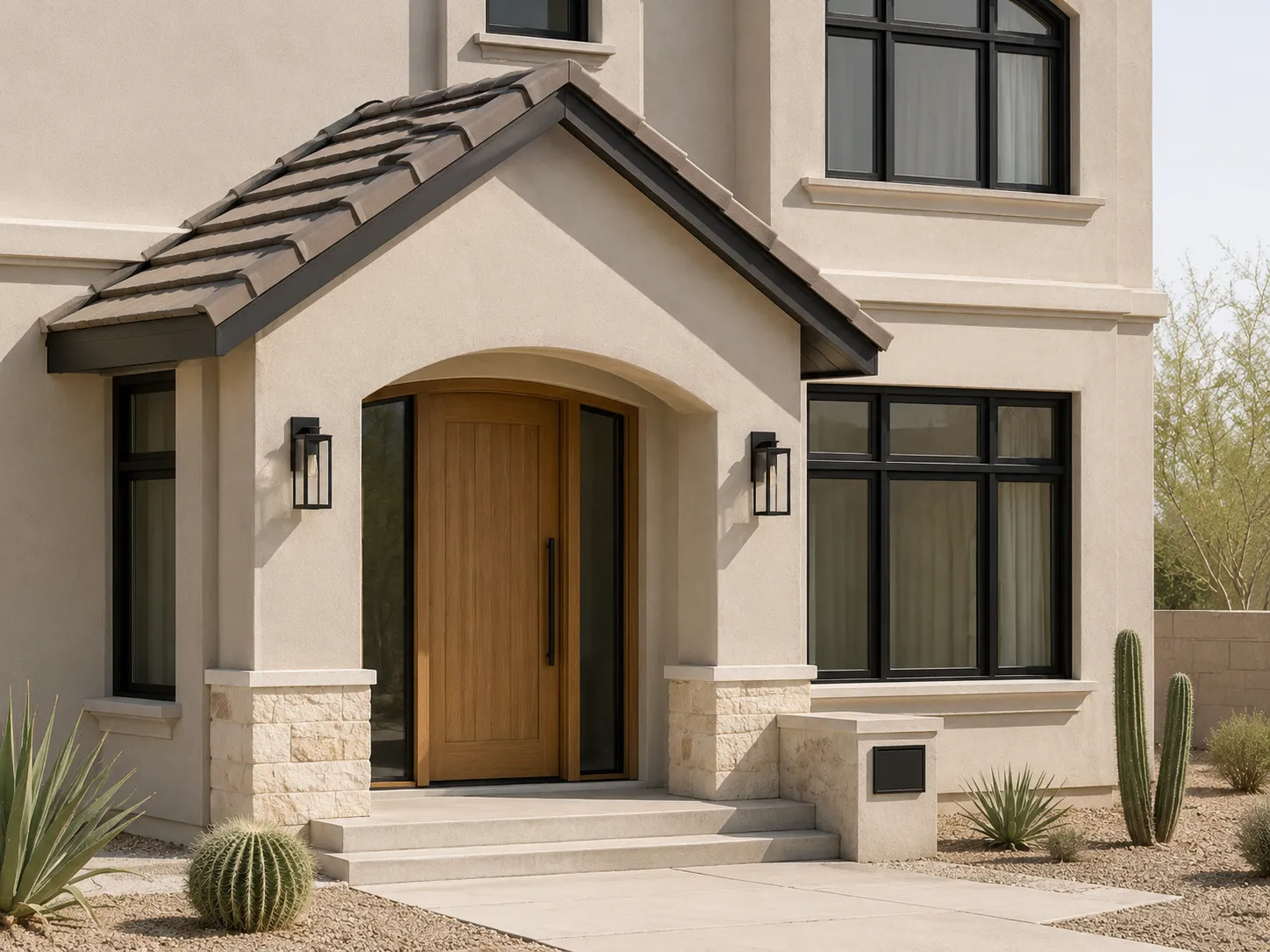
Darker exterior colors absorb more solar energy, which can increase surface temperatures, accelerate paint breakdown, and cause more noticeable fading under Arizona’s UV exposure. For large, sun-exposed wall areas, approach colors like charcoal, black, dark navy, deep brown, dark green, and burgundy with caution.
This does not mean these colors cannot be used at all. Many Arizona homes incorporate deeper tones successfully. The key is understanding the trade-offs, selecting coatings formulated for sustained UV exposure, and planning for more attentive exterior paint maintenance over time.
Using Dark Colors as Accents Instead
One of the most effective approaches is to use deeper tones strategically on smaller surfaces. Front doors, trim, fascia, shutters, and architectural details can carry dark colors without the heat absorption problems that come from covering large wall areas.
A warm white body with black window frames and a dark front door creates a modern, high-contrast look while keeping most of the exterior surface reflective. This approach is also common in HOA communities that require neutral body colors but allow more flexibility on doors and trim.
What About Cool Roof Colors in Arizona?
Roof surfaces absorb or reflect solar energy independently of your wall color, and in Arizona, the roof is one of the most significant contributors to heat gain. Lighter roof surfaces reflect more solar radiation than darker ones, and the difference in surface temperature between a light and a dark roof can be substantial during peak summer months.
Certified cool roof products are specifically tested and rated for solar reflectance and thermal emittance, not just color. A standard white wall paint applied to a roof is not the same as a rated cool roof coating. If you are considering a roof treatment to reduce heat, look for products rated by the Cool Roof Rating Council or certified under ENERGY STAR.
When coordinating roof and wall color, some combinations that work well in Arizona are: a light or white roof with warm white or cream walls, terracotta clay tile with sand or pale adobe walls, gray roofing with pale greige or soft beige, and a light brown roof with warm beige or light taupe.
How to Choose a Heat-Reflective Exterior Color in Arizona
Start with your roof. It is the one fixed element that shapes every other color decision. From there, identify permanent exterior materials like stone, brick, or wood accents that won’t change, and check HOA restrictions before selecting any color.
Choose a body color toward the lighter end of your preferred palette, then add contrast through trim, doors, and accent surfaces. A darker front door or window frames lets you add depth without compromising the wall’s reflective performance.
Test Colors in Arizona Sunlight Before Committing
Strong Arizona sunlight significantly brightens exterior colors. A soft warm beige on a paint chip indoors can read nearly white on the south side of a stucco home in July. Colors also shift throughout the day as light angles change, and west-facing walls receive a completely different quality of late-afternoon sun than north-facing ones.
Before committing, paint large test swatches on all four elevations: north, south, east, and west. View them in morning light, at midday, and in late afternoon. The goal is to see how the color performs under your home’s specific sun exposure before applying any paint.
Choose an Exterior Color Built for Arizona Conditions
Homeowners do not have to choose between curb appeal and climate-conscious performance. Lighter warm whites, sands, beiges, greiges, and sage tones generally reflect more solar energy than darker alternatives while fitting naturally with Arizona architecture.
The right choice depends on your home’s roof, stucco, landscaping, permanent exterior materials, and sun exposure. A professional color consultation can help you compare options in your actual setting before committing to a full exterior repaint.
Frequently Asked Questions
Ready to Choose the Right Exterior Color for Your Arizona Home?
Need help selecting and applying the right paint? Explore our professional exterior painting services in Phoenix. JR’s Painting can help you choose exterior colors that complement your home and stand up to Arizona sun and UV exposure.


